
Holiday guests have a way of revealing every weakness in a house. The furnace picks the coldest night to quit, the shower runs cold halfway through the morning rush, a drain backs up right before dinner, and someone trips on a loose step at the front entry. Problems that seemed minor in an empty house suddenly feel urgent when the rooms are full of family and friends.
Hosting with confidence starts long before anyone rings the bell. It depends on comfort systems that keep up with extra demand, a shell that sheds weather, a welcoming entrance, and a yard that is safe to walk through. The ten sections below cover the areas that matter most, the warning signs to watch for, and how skilled professionals keep each one ready for a full house.
Restoring Warmth When the Furnace Stops Cooperating

Heating equipment usually gives clues before it fails completely. A furnace that clicks repeatedly without lighting often has a dirty flame sensor or a cracked hot surface igniter, while one that starts and shuts off within minutes may have a faulty pressure switch or a clogged inducer vent. Squealing from the blower, burning smells, rooms that never reach the set temperature, and yellow or flickering burner flames are all signs that something inside the cabinet needs attention.
Fast heater repair begins with a technician who tests components rather than guessing. Using multimeters, manometers, and combustion analyzers, they check igniter resistance, flame sensor microamps, gas pressure, temperature rise across the heat exchanger, and carbon monoxide levels in the flue. Common fixes include cleaning or swapping flame sensors, replacing igniters, inducer motors, pressure switches, and control boards, and correcting airflow problems caused by clogged filters or closed returns. Inspecting the heat exchanger for cracks is especially important, since a breach can allow carbon monoxide into living spaces. Many providers offer same-day appointments during cold snaps, and replacing a dirty filter with a fresh pleated one is an easy step owners can take between visits.
Tepid Taps and Rumbling Tanks on Busy Mornings
Storage tanks get pushed to their limit when extra people are showering back to back. A tank that runs out quickly may have a burned-out lower element or a broken dip tube that mixes incoming cold supply with heated contents. Sediment buildup causes popping and rumbling sounds while reducing capacity, and gas units may lose their pilot because of a failing thermocouple. Rusty discharge suggests the anode rod has been consumed and corrosion has started inside.
Timely water heater repair restores reliable hot supply before the next round of guests arrives. Technicians test and replace elements and thermostats on electric models, and swap thermocouples, flame sensors, and gas control valves on gas units. Flushing sediment through the drain valve improves efficiency and quiets noisy tanks, and replacing a depleted anode rod can add years of life. A faulty temperature and pressure relief valve is replaced immediately, since it protects the tank from dangerous pressure buildup. If the tank itself is leaking, the technician can size a new tank, tankless, or heat pump unit to match household demand.
Hidden Leaks and Stubborn Clogs That Demand Attention
Pipes and drains work overtime when a house fills with people. Grease from holiday cooking hardens in drain lines, extra toilet use exposes worn flappers and weak flushes, and garbage disposals jam on fibrous scraps. Meanwhile, slow leaks behind walls and under vanities may have been soaking subfloors for months, showing up only as a musty smell or a soft spot near the toilet.
An experienced plumber clears these problems quickly and finds the root causes behind them. Technicians use drum augers and hydro-jetting to remove grease and debris, video camera inspections to locate breaks or root intrusion in sewer lines, and acoustic or thermal tools to track down hidden leaks without opening entire walls. Fixture work includes replacing flappers, fill valves, cartridges, and wax rings, along with upgrading supply lines to braided stainless steel. Adding quarter-turn shutoffs, a pressure-reducing valve set between 50 and 70 psi, and smart leak detectors helps prevent future emergencies.
What Lies Beneath the Backyard Drain Field

Properties that are not connected to a municipal sewer rely on an underground tank and drain field to treat wastewater. Solids settle in the tank as sludge, grease and oils float as scum, and clarified effluent flows out to perforated pipes buried in gravel trenches. When sludge builds too high or baffles fail, solids escape into the field and clog the soil, leading to slow drains, gurgling pipes, sewage odors, and soggy patches of unusually green grass.
Scheduling a local septic system inspection helps catch problems before they become expensive. Inspectors locate and uncover the tank lids, measure sludge and scum layers, and check the condition of inlet and outlet baffles, effluent filters, and the distribution box. They may run a hydraulic load test to see how the drain field handles water and use cameras to examine lines for crushing or root intrusion. Area inspectors understand county health department rules, soil conditions, and setback requirements, which is especially important during real estate transactions. Most systems need pumping every three to five years, depending on tank size and household occupancy. A sketch showing where the tank and field sit also helps owners avoid parking vehicles or building patios over components that need to stay accessible.
A Cooking Space Designed Around Daily Routines
The room where meals come together is often the busiest gathering spot in the house, and outdated layouts make it hard to cook and entertain at the same time. Narrow aisles create traffic jams, limited counter space forces people to juggle dishes, and too few outlets leave appliances competing for power. Older cabinets with fixed shelves waste space, and dim lighting makes prep work frustrating.
Experienced kitchen remodelers design layouts that support how families actually cook and gather. They plan distinct zones for prep, cooking, cleanup, and storage, keeping aisles at least 42 inches wide so multiple people can work comfortably. Islands with seating give guests a place to visit without getting in the way, while deep drawers, pull-out pantries, and appliance cabinets with lift-up doors keep counters clear. Quartz or granite surfaces resist stains and heat, and dedicated 20-amp circuits with GFCI protection handle modern appliances safely. A ducted range hood sized to the cooktop clears smoke and odors, and layered lighting with recessed fixtures, pendants, and under-cabinet LEDs brightens every task.
Sagging Steps and Soft Boards at the Front Entry
The front entry sets the tone for every visit, and it takes a beating from weather and foot traffic. Wood decking cups and splits as moisture cycles in and out, posts rot where they meet the ground, and railings loosen as fasteners corrode. Steps settle unevenly, creating trip hazards, while ledger boards attached without proper flashing can let water rot the rim joist of the house itself.
Professional porch repair restores both safety and curb appeal. Crews probe framing for rot, replace damaged joists and beams with pressure-treated lumber rated for ground contact, and sister new members alongside weakened ones where appropriate. Ledgers are re-secured with structural screws or through-bolts and flashed to shed water. Decking can be replaced with tongue-and-groove wood, composite, or PVC boards that resist rot and splintering. Stair stringers are rebuilt to consistent rise and run dimensions, and railings are reinforced to meet code height and load requirements. A fresh coat of paint or stain completes a welcoming first impression, and adding a handrail on both sides of wider stairs gives older visitors extra confidence.
Directing Runoff Away From Siding and Soil
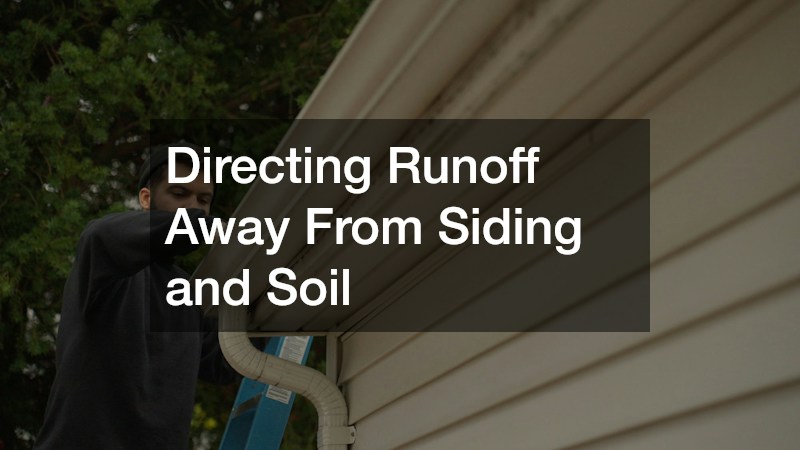
Every inch of rainfall on an average house sends hundreds of gallons of water toward the edges. Without effective collection, that runoff splashes against siding, erodes planting beds, saturates soil near the foundation, and finds its way into basements and crawl spaces. Clogged or sagging channels overflow, while leaking seams stain trim and rot fascia boards.
Properly sized rain gutters collect runoff and carry it safely away from the structure. Seamless aluminum K-style channels formed on site in 5 or 6 inch widths reduce leak-prone joints, and hidden hangers spaced every 24 inches resist sagging under heavy loads of water and leaves. A steady pitch toward each outlet keeps water moving into oversized 3×4 inch downspouts, and extensions or buried drain lines discharge runoff well away from the foundation. Micro-mesh guards limit clogging from leaves and pine needles, and regular cleaning each spring and fall keeps the whole drainage path flowing.
Patching Weak Spots Overhead Before Storm Season
Small breaches in the shell overhead let water travel along rafters and sheathing before it ever shows up as a ceiling stain. Wind can lift and crease shingle tabs, hail bruises the asphalt mat and knocks granules loose, and flashing around chimneys, skylights, and sidewalls pulls away as sealant ages. Cracked pipe boots are another common source of slow leaks that go unnoticed until insulation is soaked and decking begins to rot.
Prompt roof repair stops minor damage before winter storms make it worse. Technicians trace leaks from inside the attic, often with moisture meters or infrared cameras, then match the source on the exterior. Typical fixes include replacing missing or damaged shingles, resealing or replacing step and counterflashing, swapping cracked pipe boots for longer-lasting versions, and cutting out soft decking. Checking attic ventilation and insulation at the same time helps prevent ice dams and condensation problems, and detailed photo documentation supports insurance claims after severe weather.
Sturdy Posts and Gates That Define the Yard
A solid perimeter keeps pets and children safe, adds privacy, and gives guests a clear sense of where the yard begins and ends. Poorly built barriers lean after a few windy seasons, posts rot at grade, and gates sag until latches no longer line up. Ignoring property lines or buried utilities during construction can lead to disputes and costly corrections.
A qualified fence contractor begins with a survey review, an 811 utility locate, and a check of HOA and municipal height rules. Crews set posts in concrete footings below the frost line with gravel at the base for drainage, then attach rails and panels using galvanized or stainless fasteners that resist rust. Material choices range from cedar and pressure-treated pine to vinyl, aluminum, and ornamental steel, each with different maintenance needs and lifespans. Gates get steel frames or anti-sag kits, heavy-duty hinges, and self-closing latches, which are required for pool barriers in many areas.
Upgrading the Largest Moving Entry on the House

The overhead entry to an attached bay is often the most-used way in and out of the house, cycling thousands of times a year. Older single-layer steel panels dent easily and offer almost no insulation, letting winter cold seep into adjacent rooms. Worn rollers grind along the tracks, springs lose tension, and outdated openers may lack modern safety features.
A skilled garage door installer replaces those weak points with insulated, attractive, and quiet equipment. Polyurethane-insulated steel panels reaching R-12 or higher help stabilize temperatures, while carriage-house, contemporary, and full-view glass designs boost curb appeal. Torsion springs are calibrated to the exact panel weight, tracks are mounted plumb and level, and nylon rollers with sealed bearings keep operation smooth. Pairing the new panel with a belt-drive opener featuring battery backup, smartphone control, and properly aligned safety sensors ensures reliable, secure operation for years.
Every part of a house plays a role in how comfortable and welcoming it feels. Warm rooms and reliable hot supply keep guests comfortable, smooth-flowing drains and a healthy treatment tank prevent embarrassing surprises, and a well-planned cooking space makes gatherings easier. Outside, a sturdy entry, dry foundation, sound shell, and secure perimeter complete the picture.
Staying ahead of these needs is far easier than reacting during a crisis. Scheduling furnace and tank checkups in early fall, clearing drainage channels after the leaves drop, and addressing worn steps or loose railings before they become hazards keep the house ready for any occasion.
Long after the guests head home, those same upgrades keep paying off. Lower energy bills, fewer emergency calls, and a property that looks cared for from the curb to the backyard make everyday life easier, and the next time the doorbell rings, the house will be ready.